 Free for kids 3 to 7
Speech practice games for little voices
Your child's voice moves the game. Hold a long "ssss" to blow up a balloon, say "p p p" to drive a little car, keep a steady voice to fly a rocket. Five minutes a day, with a grown-up nearby.
Coming soon to Google Play
- No ads
- No accounts
- Works offline
- Voice stays on the phone
How it works
Short, playful turns that follow the way speech therapists practise sounds: sound alone, syllables, words, phrases, then sentences.
Talk
Your child says the sound or word Pip asks for. Pip says it first, so they know what to try.
Pip listens
Pip checks each try on the phone, offline. Not quite? Pip says it slowly, shows how to make the sound, and gives one more go.
Games move with your voice
A long sound fills a balloon, short sounds hop a frog, a steady voice flies a kite. The voice is the controller.
Stickers and levels
Pip hatches and grows as sounds get right. Eight of the last ten right moves up a level. Stickers and a gift end each session.
Six voice games
Each one turns a different kind of voice into play: long sounds, short bursts, or a steady voice.

Balloon
Hold the sound to blow up the balloon.

Car
Each sound moves the car along the road.

Rocket
Keep a steady voice to fly to the stars.

Flower
Hold the sound to water the flower and make it bloom.
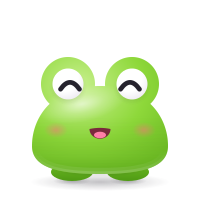
Frog
Each sound makes the frog hop to the next lily pad.
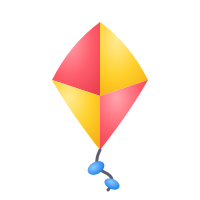
Kite
Keep a steady voice to fly the kite high.
Plus quiet tap games for a play break
After practice, little hands get a rest from talking.
- Memory match the pictures
- Pip's Puzzle drag the pieces
- Sound Train find the same first sound
- Feed Pip tap the treats
- Bubble Pop Pip Plus
- Star Catch Pip Plus
A peek inside
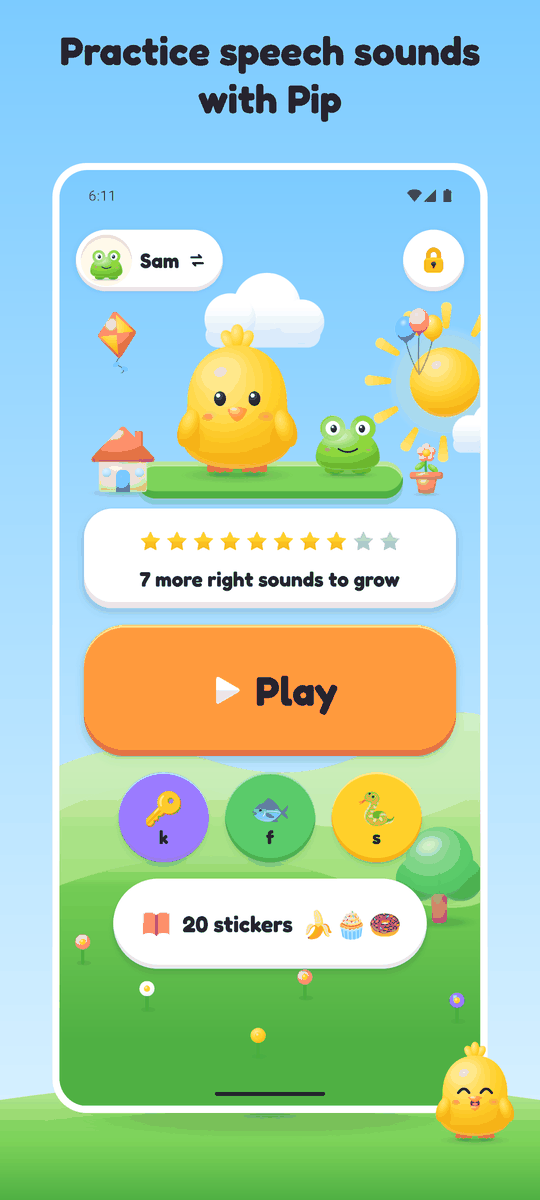
Pick a sound and play 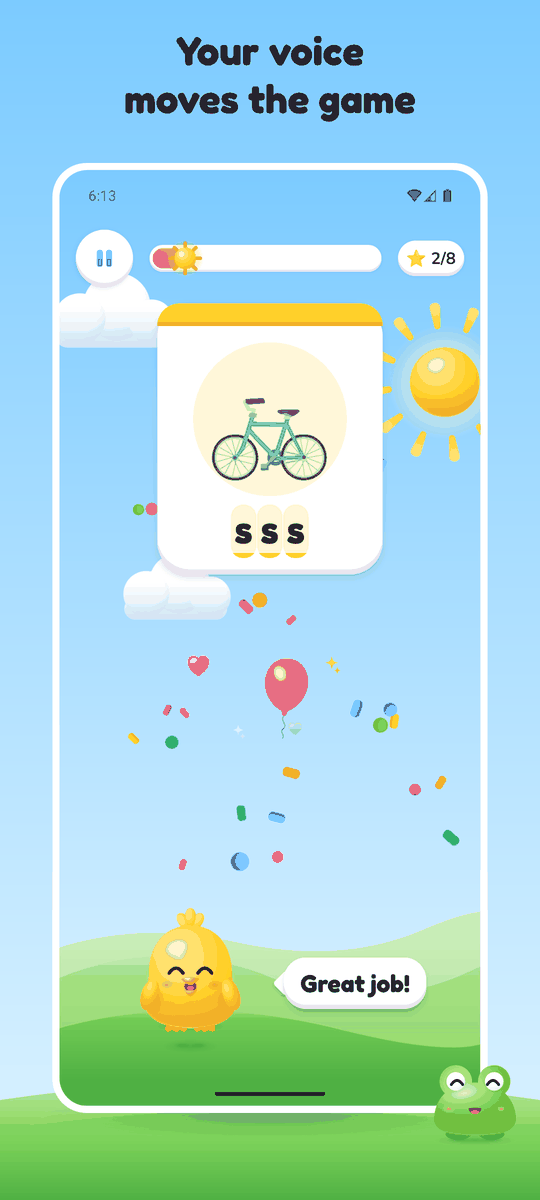
The voice moves the game 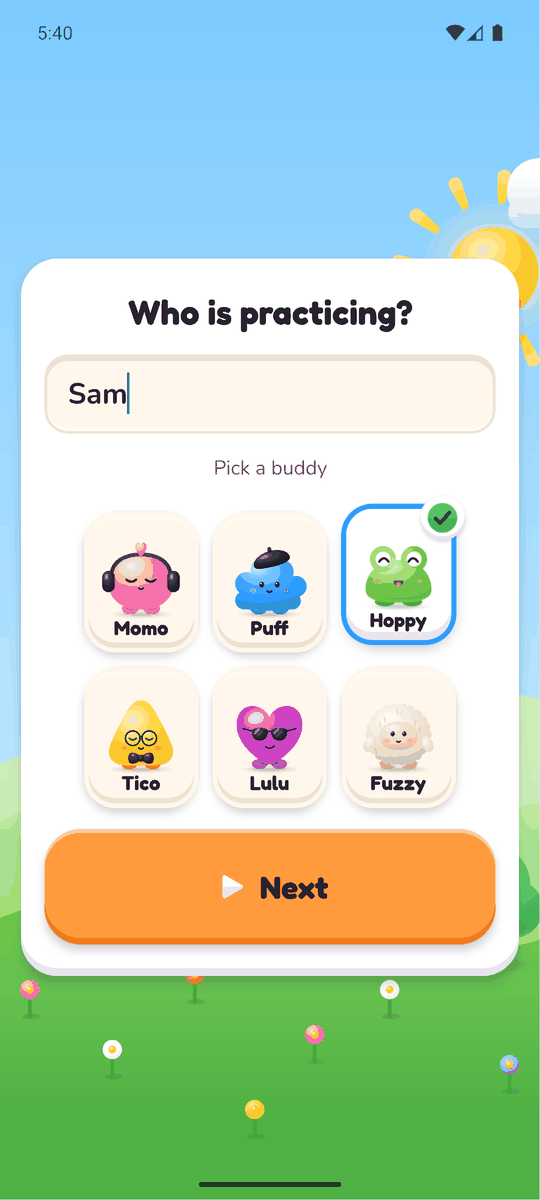
Choose a toy buddy 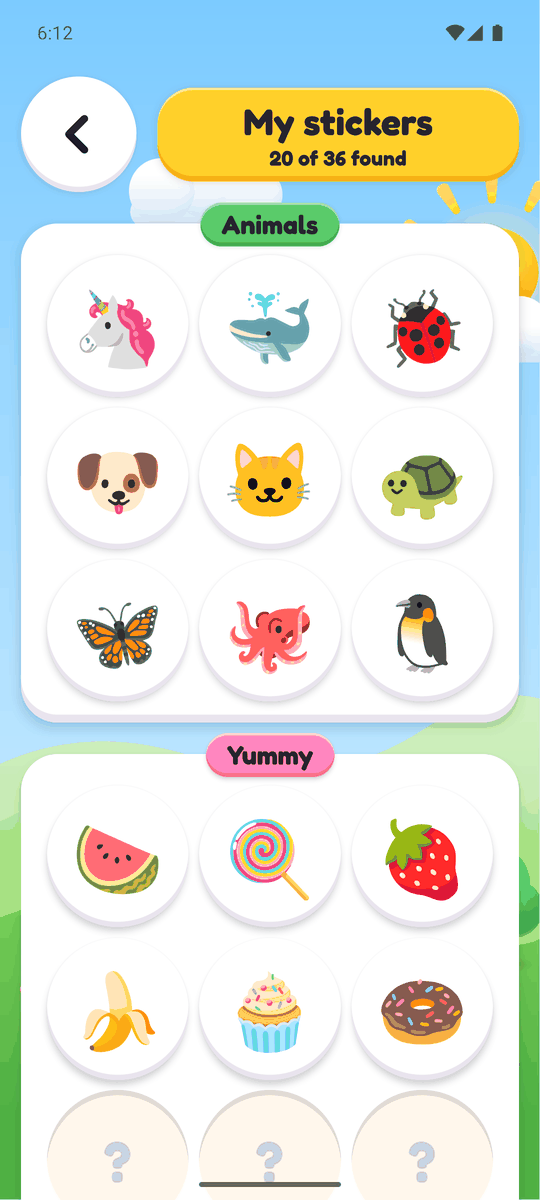
Collect stickers 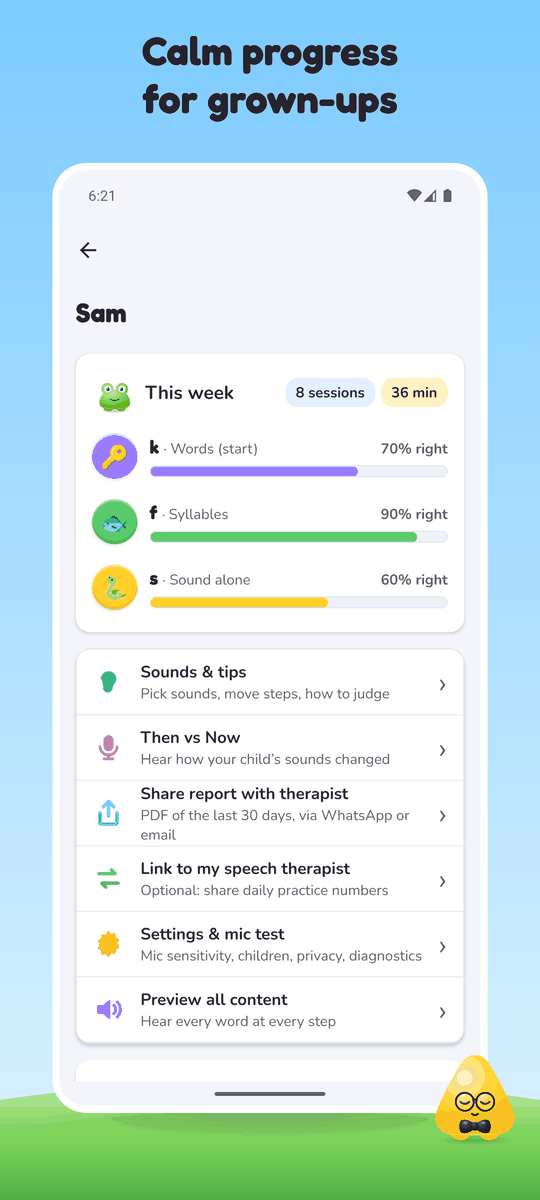
Progress for grown-ups


Swipe or scroll sideways to see more.
For parents and carers
Five minutes a day, with a grown-up nearby. Pick the sounds your child is working on: p, b, m, t, d, k, g, f, s, sh, ch, l, r and th.
No ads, anywhere
Not in games, not in the grown-up area. No analytics or tracking tools either.
No accounts
No sign-in, no email, no social features. Open it and play.
Works offline
Practice runs fully on the phone, so it works on a plane, in the car or with Wi-Fi off.
The voice stays on the phone
Words are checked by the phone's own offline speech recognition. Your child's voice is never sent to us or anyone else.
In the grown-up area (behind a parental gate)
- Progress for each sound and step
- "Then vs Now": hear a good try from this week next to an older one
- Tips for each sound: how to make it and how to judge a try
- A PDF report of the last 30 days to share with a speech therapist
- "Grown-up checks each try" if you prefer to judge yourself
- Mic test, tap mode for phones without a working mic, and a backup file you keep
Honest about what it is
Pip Talk is a practice tool, not therapy or a diagnosis. It was designed with input from a speech-language pathologist. If you are worried about your child's speech, talk to a speech-language pathologist.
Phone speech recognition is built to understand what a child means, so Pip's "right" means "understandable", not "every sound perfect". For precise practice, switch on "Grown-up checks each try".
For speech therapists
Families can link the app to you with an 8-character code. You see daily practice counts for each sound and step: right, almost and not yet. The link is off unless a grown-up turns it on.
- Aggregated daily counts only: no names, no audio, no words the child said
- The family can stop sharing at any time, and the shared data is deleted
- Families can also share a 30-day PDF report with you
Pip Talk Pro: coming soon
A dashboard for your caseload
We are building Pro with practising SLPs. Want early access, or have ideas for what would save you time?
Email us about ProPip Plus: optional, one time
All speech practice is free, forever. If you would like extras and to support the app, a grown-up can buy Pip Plus once.

- Bubble Pop and Star Catch in the play break, and four games per break instead of three
- Three bonus buddies (Stella, Rusty and Nimbus) and two bonus sticker pages (Ocean and Garden)
- One payment through Google Play, no subscription
- Only in the grown-up area, behind the parental gate. Children never see prices or locked items
English and Urdu
Pip speaks with a warm, natural voice recorded ahead of time, so nothing is generated online.
Feed Pip
Available
14 English sounds, from p and b to r and th.
پِپ کو کھلاؤ
In review
An Urdu pack, being checked by a speech-language pathologist before release.
Questions
Is Pip Talk speech therapy?
No. Pip Talk is a practice tool, not therapy or a diagnosis. It helps children practise sounds at home between sessions, or for fun. If you are worried about your child's speech, talk to a speech-language pathologist.
What happens to my child's data and voice?
Everything stays on your phone. Speech recognition runs on the phone, offline, and the voice is never sent anywhere. There are no accounts, no ads and no tracking. The only optional exception: a grown-up can choose to share daily practice counts (no names, no audio) with the child's speech therapist, and can stop at any time. Details in the privacy policy.
What does it cost?
Pip Talk is free, and all speech practice stays free. Pip Plus is an optional one-time purchase for extra play-break games, buddies and sticker pages. It is only offered in the grown-up area.
Which devices does it work on?
Android phones (it is coming to Google Play first). Word checking uses the phone's offline speech model for English; on Android 13 and newer you can download it from the phone's Settings. Without it, Pip judges tries by voice length and steadiness. No working microphone? Use tap mode and the grown-up rates each try.
What age is it for?
Children about 3 to 7, playing with a parent, carer or teacher nearby.
More help on the support page.